
Ape Escape
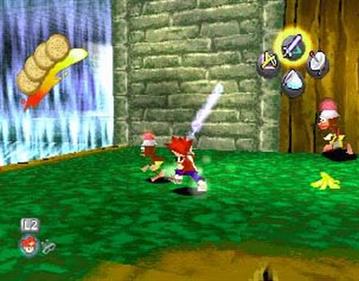
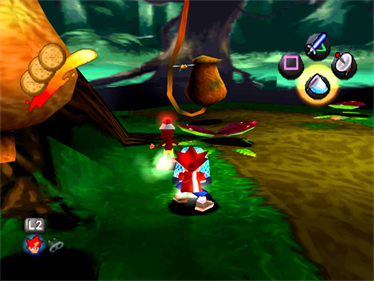
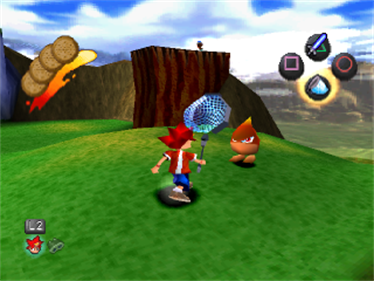
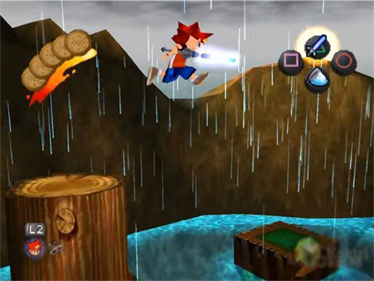
The original monkey-catching adventure that made the DualShock controller a must-have. Armed with an arsenal of quirky gadgets like the Stun Club, Time Net, and Slingback Shooter, players chase down mischievous monkeys across time periods ranging from the prehistoric era to a futuristic cityscape. Ape Escape was the first PlayStation game to require the analog sticks, turning movement and gadget-swinging into a uniquely tactile experience that still feels inventive today.

| Platform | PlayStation |
|---|---|
| Genre | 3D Platformer |
| Released | |
| Developer | SCE Japan Studio |
| Publisher | Sony Computer Entertainment |
| Available | PS1, PSN |
Where to Play
About This Game
Ape Escape was developed by SCE Japan Studio and released for the PlayStation in 1999, earning a place in gaming history as the first console game to require the DualShock analog controller. This wasn't a marketing gimmick—the entire game was designed around dual-stick controls, with the left stick handling movement and the right stick swinging gadgets like the stun club, time net, and slingback shooter. The game's colorful cast—designed by Takamitsu Iijima, a recent college graduate on the team—gave it a vibrant, expressive visual identity.
The premise is gleefully absurd: a white-haired monkey named Specter finds a prototype intelligence-boosting helmet called the Peak Point Helmet, gains human-level cognition, and promptly sends an army of monkeys through time to rewrite history. Players chase these monkeys across eras ranging from the dinosaur age to a futuristic city, each primate having its own name, personality, and alert level displayed on its helmet siren. Ape Escape was a critical and commercial hit that spawned sequels, spin-offs, and crossover appearances, but the original remains the most inventive—a game that proved new control schemes could create entirely new kinds of fun.
Did You Know?
- First game to require the DualShock — Ape Escape was the first PlayStation game that absolutely required the DualShock analog controller to play. It would not work with the original PlayStation digital pad, and the box prominently displayed this requirement.
- A rookie team designed the characters — Ape Escape's character designs for Spike, Specter, and the Pipo Monkeys were created by Takamitsu Iijima, a recent college graduate at SCE Japan Studio. Much of the development team was composed of inexperienced staff, including part-time college students handling CG work.
- Every monkey has a unique personality — Each of the 204 monkeys in the game has its own name, stats, and personality traits displayed in the Monkey Book. Their helmet siren light changes color based on their alert level — blue means calm, yellow means aware, and red means panicked — while pants color indicates the monkey's fixed type.
- Metal Gear Solid crossover — The "Snake vs. Monkey" minigame in Metal Gear Solid 3: Snake Eater lets players control Snake as he captures monkeys using stealth. Ape Escape 3 returned the favor with "Mesal Gear Solid: Snake Escape," a parody where an ape with Snake's battle data infiltrates a base. The crossover reportedly came about because Kojima's child was a fan of the series.
Critical Reception
Accolades
- #10 Best PlayStation Platformer of All Time — IGN, 2014
- 91/100 Metacritic score — one of the highest-rated PS1 platformers — Metacritic
- Innovation Award Recognized for pioneering dual-analog gameplay on console — PlayStation Blog, 2019
Club Achievements

Gold Medal on Snake River
Gold
Monkey Madness Under a Minute
Silver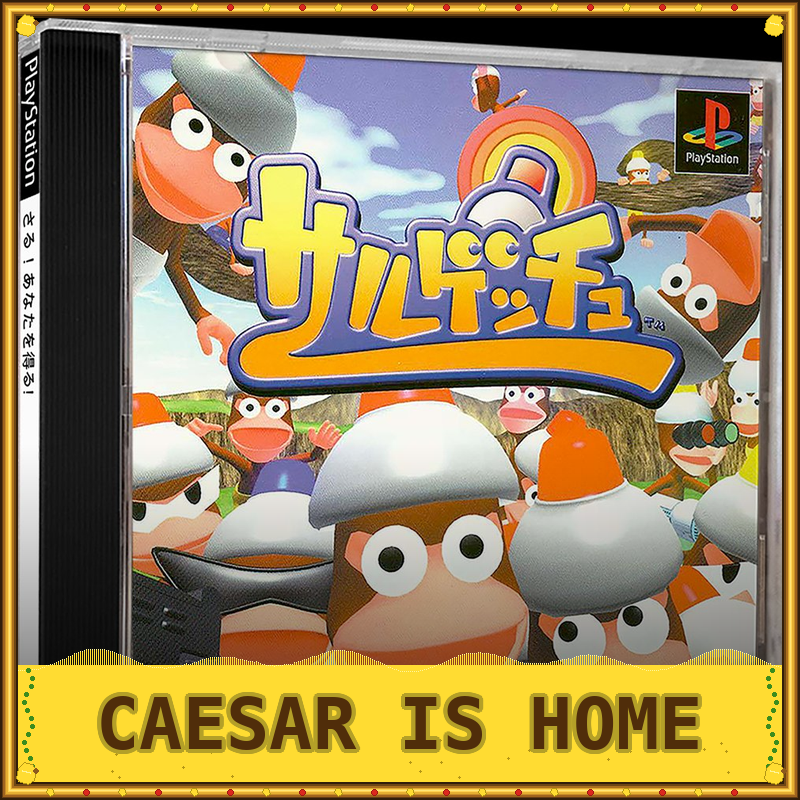
Beat the Game
BronzeOther Participants
No other participants yet.
Speedrun Records
Ape Escape has an active speedrunning community that leverages precise gadget use and route optimization to catch all the required monkeys as fast as possible.
Soundtrack
Composed by Soichi Terada
Soichi Terada's soundtrack is a funky, eclectic mix of house, jazz, and electronic beats that gives Ape Escape its distinctive personality. Each time period has a unique musical identity — from prehistoric tribal rhythms to futuristic synth-pop. The soundtrack has gained a cult following in the electronic music community, with Terada's deep house tracks being sampled and celebrated far beyond the gaming world.
Notable Tracks
- Theme of Ape Escape
- The Lost Land
- Primordial Ooze
- Crumbling Castle
- Specter's Theme
- Monkey Madness

If You Liked This

Sources & Attribution
- Game description and historical background adapted from Wikipedia
- Trivia sourced from Giant Bomb, The Cutting Room Floor, and community research
- Review scores from IGN, GameSpot, and Famitsu
- Accolades from IGN, Metacritic, and PlayStation Blog
- Speedrun data from Speedrun.com
- Playtime estimates from HowLongToBeat
- Screenshots and box art via LaunchBox Games Database
- Soundtrack information from KHInsider
- Pricing data from PriceCharting